



To minimize the negative impacts on the environment is a commitment all over the world. The Committee 350 of the American Concrete Institute recognized the need to run standardized procedures of testing reinforced concrete structures for containment of liquids that could lead to environmental damage.
These test methods provide procedures and acceptance criteria for making a tightness test.
The same are applicable to containment structures (closed or open) of liquids and gases that are constructed with concrete, or a combination of concrete and other materials.
The standard includes hydrostatic testing, hydrostatic, overloaded, and pneumatic.
How this test is done to a pool of large dimensions?
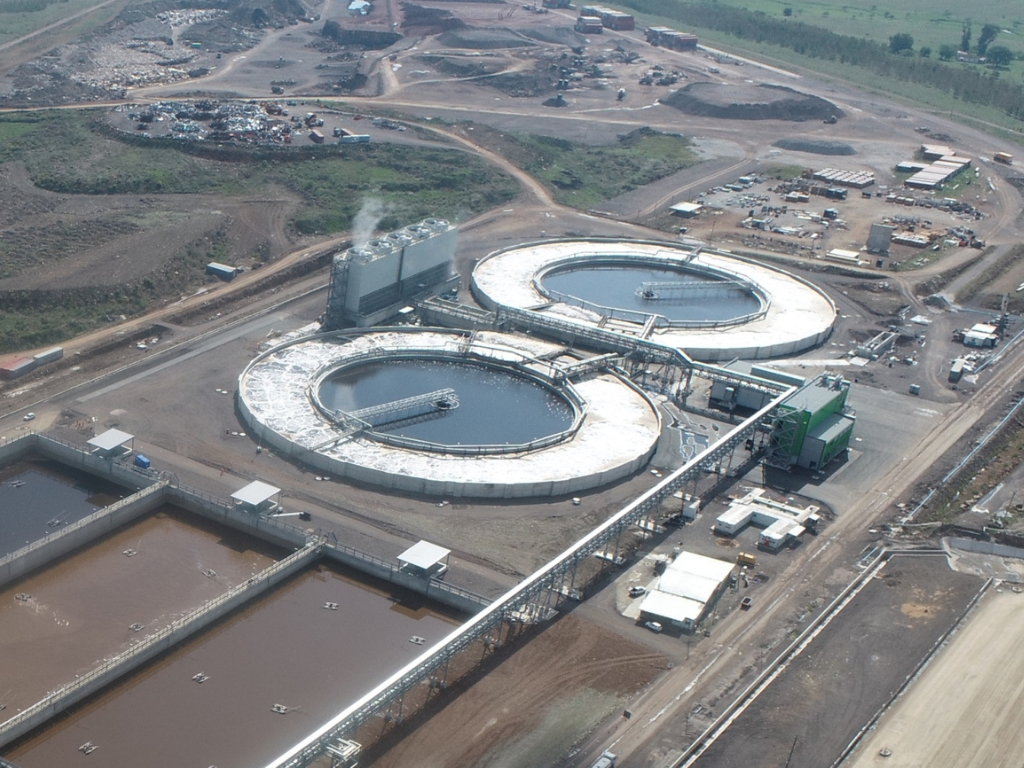
So we did it in one of the most important projects in the Uruguay. We apply the standard ACI 350.1-10 in containment structures open of reinforced concrete. To give you an idea, these structures contain the liquid equivalent of a lake half a hectare.
We are going to explain the acceptance criteria imposed by the standard to have two phases: qualitative and quantitative.
The qualitative phase includes the visual inspection during a short period of days before the quantitative phase of the test. If you notice water on the outer surfaces of the containment structures, including joints and fissures, where the humidity may be picked up with a dry hand, it is considered that the containment structure has not passed phase 1 of the hydrostatic test.
For the start of the quantitative phase should be taken into account the following aspects:
- Must be passed fase1.
- The ambient temperature must not exceed 35°C or the freezing point of water.
- Should not be scheduled testing if the forecasts of the weather conditions are adverse.
The period of the trial to the criterion of the phase 2 is 72 hours, during which we carried out measurements of the level of initial and final of the surface of the water with an interval of 24 hours.
The method should consider the adverse effects of wind or other factors that could affect the measurement, which can be done in different ways, using simple instruments or more sophisticated (topographic) depending on the degree of error that is deemed suitable.
Should be placed tanks witnesses in the structure, since these allow to measure the evaporation losses and the entry of water through precipitation.
The temperature of the water will be registered in a certain depth, below the surface of the water at the beginning and at the end of the test.
The losses are eligible for up to a certain range, it is necessary to set these parameters at the time of planning the test.
Shall be deemed to be approved by the tightness of the structure when the two phases are approved.
It is important to note that this is the first time that they apply criteria of control with this level of demand in Uruguay.
It is something more than simply comply with the requirements of a standard. This is to ensure that structures are safe and sustainable for the long term. And that is something that we all should have in mind to avoid environmental damage.